Skip to content






.svg)
.svg)
.svg)
.svg)
.svg)
.svg)
.svg)
.svg)
.svg)

.svg)
.svg)
.svg)
About
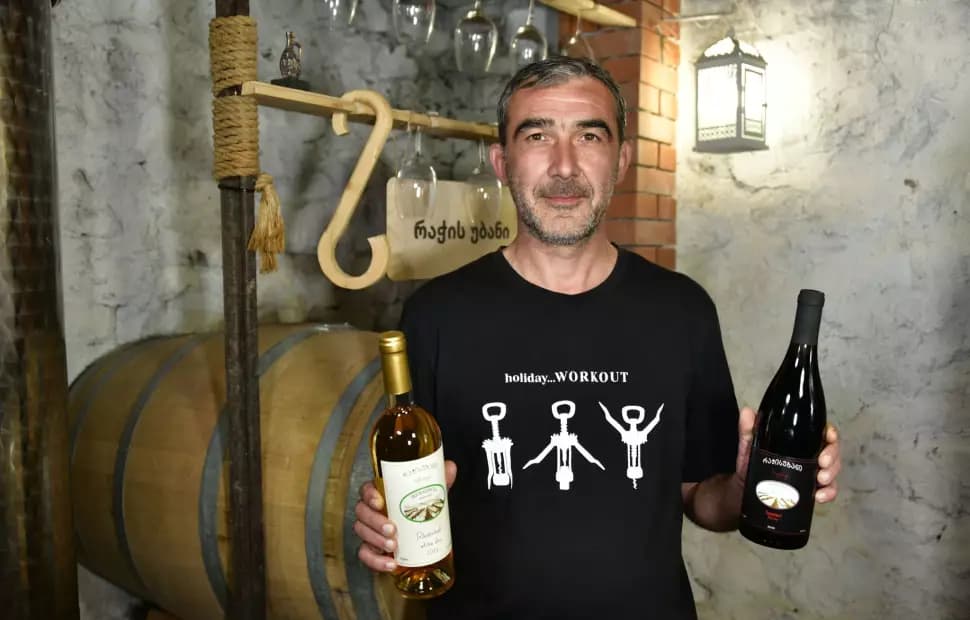
Always OpenRachisubani Winery was founded in 2019 by vigneron and winemaker Nikoloz Iremashvili.
Nikoloz's wife, Tamar Okriashvili, inherited traditional viticulture and winemaking from her family. Originally from the Racha region, Tamar’s grandfather resettled his family in Bolnisi in 1956, where he planted new vineyards of the Georgian grape Rkatsiteli and the European variety Aligoté, which he got from a vine nursery in Bolnisi. In later years, he was actively helped by Nikoloz, and he bequeathed all the vineyards to him.
Nikoloz decided to uphold the family tradition and turned viticulture and winemaking into a commercial activity: “I used to work with my grandfather-in-law during harvest; however, I did not have experience taking care of vineyards on my own. After his death, I faced the fact that I had to take on this responsibility — to deepen my knowledge and involve family members.”
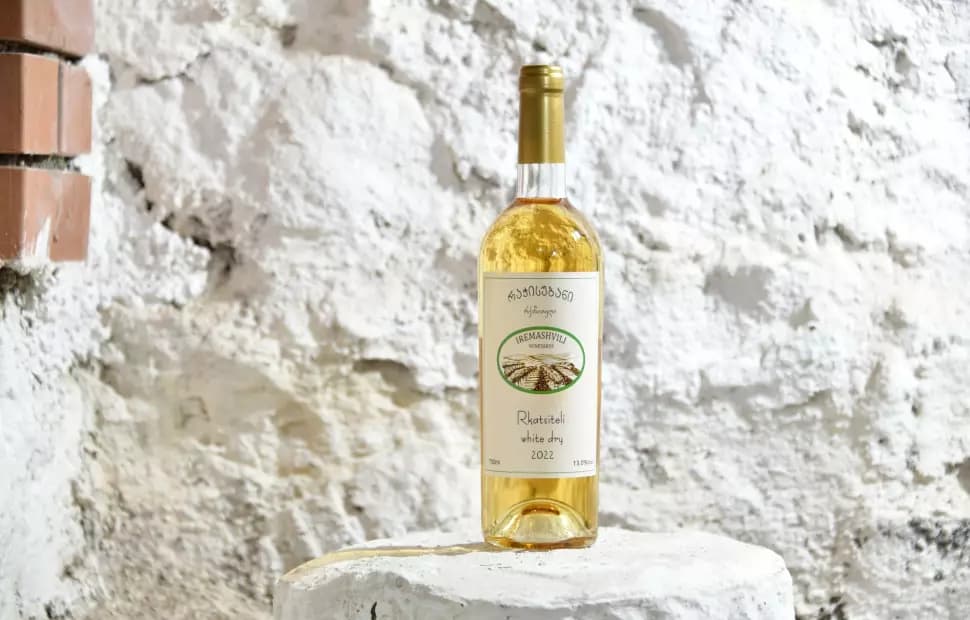
The first bottling at Rachisubani Winery was Bolnisi Rkatsiteli in 2019, made by the classical method: fermentation in stainless steel tanks with little-to-no skin contact. Nikoloz was not satisfied with the result and started to enroll in professional winemaking training courses. In 2020, he completed a full viticulture course through the the Georgian Wine Guild. There, Nikoloz learned traditional Georgian winemaking methods of fermenting wine in qvevri — amphorae-shaped clay vessels implanted in the ground.
Nikoloz enjoyed the process of viticulture so much, that to this day, he takes care of all of his vineyards himself with only the help of family members. Currently, Nikoloz grows Shavkapito and Rkatsiteli Muskat. However, Bolnisi has a deep Swabian heritage: in the 19th century, Swabian colonists settled in Bolnisi — then called Ekaterinenfeld — and nearby villages, where they were actively involved in viticulture and winemaking processes. As an ode to the region’s Swabian heritage, Nikoloz plans to plant the German grape, Riesling.
Rachisubani’s first branded bottling took place in 2021. Nikoloz entered the market with Rkatsiteli made by the Swabian method — fermentation in oak barrels or large oak vats — and Saperavi, made in traditional Georgian methods using qvevri. In the future, along with the expansion of vineyards, he plans to contribute to local wine tourism.
What this place offers
Wine purchase
Georgian cuisine
Degustation